

NDC DHA Multan: Complete Guide for Plot Sellers
-
by Lahore Real Estate LRE
- October 6, 2026
- Blog
- 0
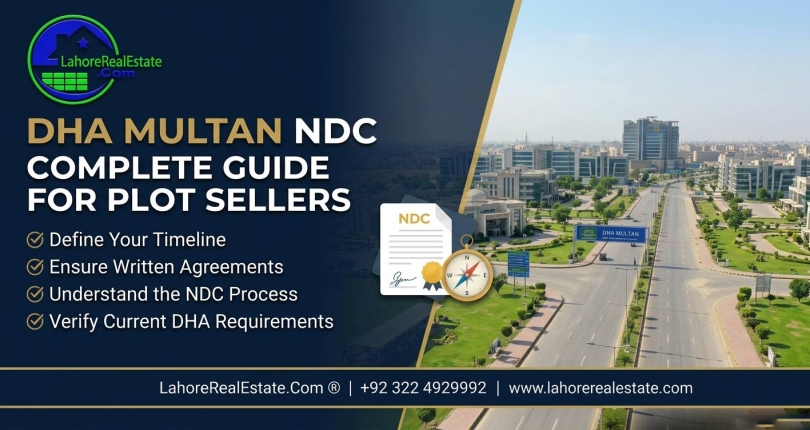
NDC DHA Multan: Complete Guide for Plot Sellers
Selling a plot in DHA Multan involves several important steps, and one of the most important documents in the transfer process is the NDC DHA Multan, or No Demand Certificate. Many sellers know that an NDC is required, but they may not fully understand what happens after signing it, who submits it, what role the dealer plays, and what can happen if a property deal does not proceed.
This guide explains the NDC DHA Multan process, the potential risks for sellers, and the precautions that can help make a plot transaction safer and more organized.
What Is NDC in DHA Multan?
NDC stands for No Demand Certificate. According to DHA Multan’s published transfer procedure, the NDC is the first step in the transfer process and is used to address outstanding dues and objections associated with the property. The NDC application requires the seller’s signature and thumb impression.
For a seller, the NDC is therefore an important stage in moving a property transaction toward transfer.
However, signing an NDC should not be treated as a simple formality. Sellers should understand the transaction terms and the role of the dealer before handing over a signed NDC.
How Does the NDC DHA Multan Process Start?
When a seller decides to sell a plot, the dealer normally begins the transaction by obtaining the required NDC documentation from the seller.
The seller signs the NDC application and provides a thumb impression. Where an NDC is submitted through a realtor, DHA Multan’s published form includes a realtor stamp and identifies the authorized representative or CEO of the agency submitting the application. The official form also provides for direct application by the seller.
After the application is submitted, the transaction progresses through the DHA transfer procedure.
This is why sellers should know exactly which dealer is submitting the NDC and what agreement exists between the seller and the dealer.
Why Can NDC Become a Concern for Sellers?
The biggest concern discussed in this context is what happens when the property transaction does not reach completion.
Imagine that a seller gives a signed NDC to a dealer, but there is no written agreement clearly explaining the transaction timeline and responsibilities.
Later, the buyer may change their decision, fail to complete payment, or the transfer may not take place within the expected timeframe.
At this point, the seller may face difficulty moving forward with another transaction if the previous NDC has not been dealt with or cancelled according to the applicable DHA procedure.
This is why the seller should not focus only on getting the NDC. The seller should also establish clear terms with the dealer before the NDC is submitted.
Always Define the Transfer Timeline
One of the most important precautions for a seller is to clearly define how long the buyer and dealer have to complete the transaction.
For example, the seller and dealer can agree on a specific timeframe for completing the transfer.
The agreement should also explain what happens if the transfer is not completed within that period.
Most importantly, the seller should have a clearly documented process for dealing with the NDC if the transaction fails.
Having these terms in writing can help reduce misunderstandings between the seller, buyer and dealer.
Use a Written Agreement With the Dealer
A major recommendation from the source material is to create a written agreement with the dealer before handing over the signed NDC.
The suggested option is an agreement on a Rs. 1,200 stamp paper, clearly mentioning the terms and conditions of the transaction.
The agreement should cover important points such as:
- The agreed timeframe for the property transfer.
- The responsibilities of the dealer.
- What happens if the buyer backs out.
- What happens if the transfer is delayed.
- The procedure for cancelling the NDC if the transaction does not proceed.
The purpose is simple: both sides should know their responsibilities before the NDC is submitted.
What If a Stamp Paper Agreement Is Not Possible?
If a formal stamp-paper agreement cannot be arranged, the source material recommends getting the terms and conditions documented on the official letterhead of the authorized real estate company.
The document should clearly mention the agreed transfer timeline and the responsibility regarding NDC cancellation if the transaction is not completed.
It should also be properly signed and stamped by the company’s CEO or authorized person.
The important principle is not to rely solely on verbal commitments when dealing with a valuable property transaction.
Seller’s Dealer or Buyer’s Dealer — Why Does It Matter?
Another important point for sellers is understanding which side’s dealer is submitting the NDC.
A seller may give the NDC to their own dealer, who then submits it through the appropriate channel.
Alternatively, the NDC may be submitted through a dealer representing the buyer.
This distinction can become particularly important if the transaction later breaks down.
If the NDC has been submitted through the buyer’s dealer, that dealer may primarily be concerned with protecting the buyer’s interests. According to the source material, if the deal fails, there may be a dispute regarding the token money and cancellation of the NDC.
Therefore, sellers should ask their dealer a simple but important question:
“Who is submitting my NDC, and what happens if this deal does not complete?”
Getting a clear answer before signing can prevent confusion later.
How Can a Seller Protect Their Plot?
A seller can take several practical precautions before submitting an NDC:
1. Understand the NDC
Do not sign the NDC without understanding what you are signing and how it fits into the transfer process.
2. Know Your Dealer
Confirm whether you are dealing directly with your own dealer or whether another dealer representing the buyer is involved.
3. Put the Terms in Writing
Clearly document the transfer timeline and responsibilities of all relevant parties.
4. Define the NDC Cancellation Process
Make sure there is a clear written understanding about what happens to the NDC if the transaction fails.
5. Keep Copies of Everything
Keep copies of the NDC, agreements, receipts, correspondence and other relevant transaction documents.
6. Verify Current DHA Requirements
DHA Multan’s procedures and requirements can change. The current official documentation should always be checked before starting a transaction. For example, DHA Multan’s published material currently lists a 90-day validation period for both Regular and Open NDCs, while older publicly available SOPs show different validity periods. This is why sellers should rely on the latest DHA-issued information for their specific transaction.
NDC DHA Multan: Important Advice for Buyers and Sellers
The NDC is an important part of the DHA Multan transfer process, but the document should be considered within the complete property transaction rather than in isolation.
For sellers, the key issue is understanding what they are agreeing to before signing.
For buyers, it is equally important to ensure that the property transfer follows the required DHA procedure and that the relevant documents and dues are properly handled.
DHA Multan’s published procedure identifies NDC as the first transfer step and provides specific documentation requirements, so both parties should verify the latest official requirements before proceeding.
Final Thoughts
The NDC DHA Multan process is an important stage when selling or transferring a plot. While the NDC itself is part of the official transfer procedure, sellers should also pay close attention to the agreement they make with their dealer.
Before signing your NDC, understand who is submitting it, establish a clear transfer timeline, document your terms and conditions, and make sure there is a clear understanding of what happens if the deal does not proceed.
Property transactions involve significant financial value, so written documentation can help prevent unnecessary misunderstandings and disputes.
Remember: Do not just ask where you are signing the NDC. Ask who is submitting it, what the agreed timeline is, and what happens if the transaction fails.
This article is for educational and awareness purposes only. DHA Multan’s procedures, requirements, fees and validity periods may change, so always verify the latest requirements directly with DHA Multan and obtain appropriate professional or legal advice for your specific transaction.
Lahore Real Estate ® MB-46 Main Boulevard, DHA Phase 6, Lahore, Pakistan +92 322 4929992
Lahore Real Estate – The Largest & Most Trusted Estate Agency in Lahore Keywords:NDC DHA Multan, NDC DHA Multan process, DHA Multan NDC, No Demand Certificate DHA Multan, DHA Multan plot transfer, DHA Multan plot sale, NDC cancellation DHA Multan, DHA Multan NDC guide, NDC requirements DHA Multan, DHA Multan seller guide, DHA Multan property transfer, NDC risks for sellers, DHA Multan dealer, DHA Multan real estate, plot selling guide DHA Multan LINK: https://lahorerealestate.com/dha-multan/






Join The Discussion
You must be logged in to post a comment.