

Overseas Pakistanis’ Tax Relief on Property in Pakistan
-
by Lahore Real Estate LRE
- December 24, 2025
- Blog
- 0
Overseas Pakistanis’ Tax Relief on Property in Pakistan
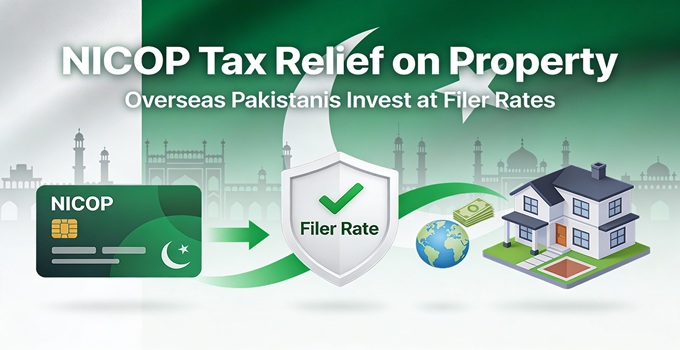
Overseas Pakistanis holding a valid National Identity Card for Overseas Pakistanis (NICOP) now enjoy major tax relief when buying or selling property in Pakistan. The Federal Board of Revenue (FBR) has clarified that eligible non-residents with NICOP or Pakistan Origin Card (POC) can be charged at filer rates on key property taxes, even if they are not appearing on the Active Taxpayers List (ATL).
These incentives are part of wider real estate and tax reforms designed to attract foreign remittances into Pakistan through formal banking channels. For overseas investors, this means lower transaction costs, simpler compliance, and a more predictable tax environment when investing in cities like Lahore, Karachi, Islamabad and major housing schemes such as DHA and LDA projects.
Filer-Rate Advantage on Purchase: Section 236K
Under Section 236K of the Income Tax Ordinance, 2001, advance tax is collected from the buyer at the time of property transfer. In the standard regime, buyers who are not on the ATL pay much higher “non-filer” rates compared to registered filers, especially for higher-value properties.
FBR’s updated policy states that overseas Pakistanis who hold NICOP or POC and qualify as non-residents are allowed to pay advance tax at filer rates under Section 236K, even if they are not filing returns in Pakistan or are missing from the ATL. This effectively upgrades them to filer treatment for that transaction and shields them from the very high non-filer slabs that can reach double-digit percentages in some schedules.
To unlock this benefit, the property must be purchased using official banking channels such as Remittance, Roshan Digital Account (RDA) or other documented non-resident accounts. The purpose is to reward clean, traceable foreign inflows and reduce the tax penalty that previously discouraged compliant overseas buyers from investing in Pakistani real estate.
Filer-Rate on Sale: Section 236C & Capital Gains Relief
On the selling side, Section 236C imposes advance tax on the seller at the time of transfer, with separate rate structures for filers and non-filers. Recent clarifications confirm that qualifying overseas Pakistanis with NICOP/POC can also be charged at filer rates under Section 236C, even when they are not on the ATL, provided they meet non-resident conditions and route funds properly.
Additionally, dedicated incentives linked to Roshan Digital Account and foreign-currency–funded property investments may significantly reduce or even exempt capital gains tax (CGT) in certain cases. Some guidance notes indicate that properties acquired through RDA and held for a specified minimum period can enjoy very favourable CGT treatment, encouraging long-term, documented investment by the diaspora.
While these CGT reliefs can be generous, exact applicability depends on factors such as holding period, nature of funds, and whether the investment falls under specific SBP and FBR schemes. Because Finance Acts and circulars change frequently, overseas sellers are strongly advised to confirm current CGT rules with a professional tax adviser before planning an exit.
Protection from Non-Filer Penalties & Tenth Schedule
One of the biggest problems for overseas investors in the past was the Tenth Schedule of the Income Tax Ordinance, which imposed higher withholding rates and adjustments for non-filers under Section 100BA. In property transactions, this could multiply advance tax liabilities and create complex “deemed income” issues, even for genuine non-residents who were compliant in their country of residence.
Under the newly announced overseas policy, NICOP and POC holders meeting non-resident criteria are effectively protected from those harsher Tenth Schedule consequences on property deals when they are treated at filer rates for Sections 236K and 236C. Several real estate advisories highlight that FBR intends to separate genuine overseas remittance-based investors from domestic non-filers who deliberately avoid tax filing, making the regime more investor-friendly for the diaspora.
This relief does not mean that all taxes are removed; instead, it removes extra punitive surcharges and multipliers that previously applied just because someone was listed as a “non-filer”. As a result, overseas Pakistanis can now plan property deals with clearer numbers and less fear of unexpected tax loading at the transfer stage.
How Overseas Pakistanis Can Claim the Exemptions
The process for claiming NICOP-based tax relief has become more digital and system-driven through the FBR IRIS platform and registrar offices. When a property is being bought or sold, the sub-registrar, society transfer office, or DHA/LDA transfer branch must feed the buyer’s or seller’s NICOP/POC details into the FBR system before generating the tax challan.
In practice, the key steps include:
-
Providing your valid NICOP or POC number so IRIS can auto-verify your non-resident status and enable filer-rate advance tax under Sections 236K and 236C.
-
Presenting documentary proof that the consideration is being paid or received through official banking channels, such as RDA, foreign currency accounts or inward remittances, as this is central to the overseas relief framework.
-
Generating a Payment Slip ID (PSID) and paying through a designated bank to obtain a Computerized Payment Receipt (CPR), without which the transfer will not proceed in DHA, LDA, or other authorities.
In major developments such as DHA Lahore and other branded societies, transfer offices are already familiar with the new overseas rules and can guide NICOP holders through the required documentation. However, FBR also reserves the right to ask for additional proof of non-residency (such as travel records or foreign tax residency papers) in doubtful cases, so keeping your documentation organized is essential.
Other Applicable Taxes & Limitations
Even with these federal tax incentives, overseas Pakistanis are not exempt from all charges related to property transfer. Provincial taxes such as stamp duty, Capital Value Tax (CVT) where applicable, registration fee, and local Urban Immovable Property Tax remain payable according to each province’s laws and DC valuation tables.
For example, the updated DHA Lahore transfer schedules for 2025–2026 still list standard stamp duty percentages, CVT, membership fees, and DHA transfer charges, in addition to the FBR’s advance tax. Furthermore, where large or luxury transactions trigger Federal Excise Duty (FED) or special surcharges, NICOP-based filer-rate treatment does not automatically waive those separate liabilities.
Because tax rules on real estate are being actively revised through Finance Acts 2024 and 2025, including changes to rates, thresholds and definitions of non-resident status, overseas investors should always reconfirm details right before any major purchase or sale. Taking a short paid consultation with a Pakistan-based tax lawyer or chartered accountant can save significant money and avoid future disputes with FBR or local authorities.
Tags: overseas Pakistanis property tax relief, NICOP tax exemption Pakistan, filer rate Section 236K 236C, non resident Pakistani property tax, Roshan Digital Account property, overseas Pakistanis CGT exemption, Clause 111AC overseas investors, Pakistan real estate tax 2025, DHA Lahore overseas tax policy, LDA Lahore property taxes






Join The Discussion
You must be logged in to post a comment.